Here you’ll find our online digest dedicated to the art and science of communications. It’s also named after an isotope of the element cobalt.

As an increasing number of life science companies begin to incorporate artificial intelligence into their workflows, knowing the legal and regulatory risks of AI and the safeguards to prevent potential harm has become paramount. Learn how to develop AI brand guidelines and use policies that protect brand integrity, address ethical and compliance risks, and support creative consistency across all channels.

Effective trade show booth design starts with a clear goal. Learn how to shape messaging, layout, visibility, engagement, lead capture, and logistics around that goal. A downloadable trade show checklist helps science companies evaluate exhibits before production and installation.

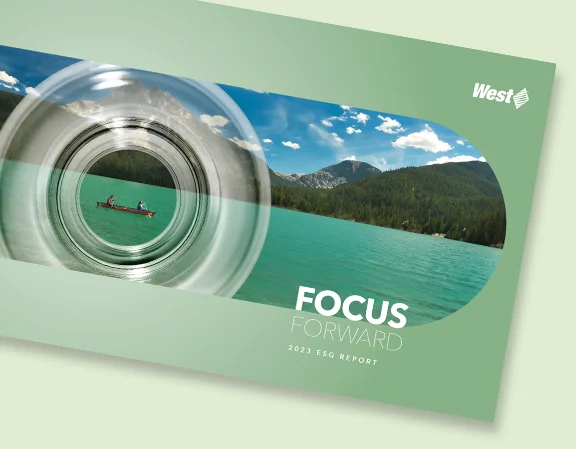
Accessible ESG reporting gives every stakeholder a meaningful opportunity to evaluate performance. This blog explains common barriers, outlines how WCAG relates to PDFs, websites, and European reporting requirements, and shows why automated, manual, and user testing should inform content, design, brand guidelines, and report development from the start.

Pharma and biotech are two of the biggest pillars of the healthcare industry and have started to converge, but their marketing strategies remain completely distinct. This blog offers an in-depth breakdown of the unique strategies required for pharma versus biotech marketing, exploring their respective target audiences, messaging, and channels.

Often, the most influential discoveries in the history of life sciences can be traced back to a singular moment or, in some cases, a single sentence. This blog explores ten of those pivotal instances in which just a few words permanently reshaped our understanding of the world and science.


Cobalt received four MarCom Awards in the 2024 competition.

Ten nonfiction science books to consider for your next read.

Cobalt received four MarCom Awards in the 2024 competition.

This blog explores best practices for trade show marketing in the science sector, emphasizing strategic pre-show planning, engaging booth design, and effective post-show follow-up. It provides actionable insights to help science-based businesses stand out, connect with industry leaders, and achieve measurable success at trade shows.

Learn how the customer journey map can guide your content strategy and reduce the friction that may stop a customer’s progress. Consider the customer journey for a fictional medical device startup company and how to describe and target the ideal customer.

Learn how design principles can help B2B science marketers engage and inform their audience and ease comprehension of complex information.

A unique and compelling value proposition is essential for defining why a potential customer or partner should choose you over a close competitor.

Cobalt received four MarCom Awards in the 2023 competition.

Cobalt Communications, a leading provider of marketing services for the life science industry, was recently recognized as one of the top 10 life science marketing agencies by Life Sciences Review, a publication covering the industry.

This article will introduce common AI tools and how to use them effectively for brainstorming in creative agencies.

AI marketing tools can deliver many benefits, allowing companies to operate more efficiently while better predicting and satisfying customer needs. Learn about related ethical and legal concerns and how to handle them.

Good graphic design is a key element of nearly any marketing communications project. Find out how incorporating visual design into your communications can help you meet the challenges of marketing your science-focused products and services.

Brand guidelines detail a company’s visual identity. Find out more about what brand guidelines are and how they’re useful to companies of all sizes.

Infographics have transformed the way, and the speed with which, we understand complex concepts and act on them.

Review everything you need to know to start designing websites that appeal to different personality types.

Writers and designers are “creatives,” but they work quite differently. What can each creative discipline learn from the other?

What makes a slogan so effective? Why do some (think “Where’s the Beef?”) become earworms and others fall flat?

Also called vision boards or inspiration boards, mood boards are tools for communicating a feeling, theme, persona or mood for a design or a style in a way that can be quickly absorbed and understood by those viewing them. Mood boards can be used to confirm that all stakeholders are on the same page or get feedback if not. Join Cobalt Communications Art Director Mark Miller on an exploration of this vital design tool.

When you think of brainstorming, you might conjure up images of the Schooner Tuna creative session from Mr. Mom: agency team members gathered in a conference room, cigarette smoke billowing, clothes wrinkled, Chinese food growing crusty in the takeout containers while ideas died their slow death on an easel pad. A lot has been learned about brainstorming since then, including the fact that groups are not always better than individuals when it comes to generating great ideas.

Successful environmental branding creates a physical space that effectively embodies a brand and communicates its attributes, personality and key messages. That space may be in retail stores, restaurants, office environments or even at tradeshows. It is accomplished through intentional design of a space’s atmosphere and carefully considers factors such as color, texture and materials, size and smell.

You’re always one step away from the people who touch your projects. Get to know them.